To what extent can S1 episode 1 of Life on Mars be seen as a postmodernist text ?
The content below is not prescriptive and all valid points should be credited. It is not
expected that responses will include all of the points listed.
Responses are expected to apply knowledge and understanding of postmodernism to the
set product studied. Responses in the higher bands will explicitly engage with the debate in
the question around 'to what extent' the set product is postmodern and draw conclusions that
are substantiated by effective reference to examples, responses in the middle band will show
some engagement with this debate and use examples in a straightforward way to support
conclusions, whilst responses in the lower bands may not engage with the debate in the
question, may not draw conclusions that are substantiated by reference to examples, or may
simply describe aspects of postmodernism and/or the set product.
There is no requirement to argue that the product is postmodern; candidates might equally
argue that the product is not postmodern at all, or that it is only postmodern to a certain
extent. Various conclusions are acceptable, provided they are substantiated through
analysis of the set product.
AO2
In applying knowledge and understanding, reference will be made to some of the following
characteristics, qualities, conventions or features associated with postmodern products
:
reflexivity and anti-realism
bricolage
hybridity
parody and/or pastiche
intertextuality
postmodern irony
implosion
postmodern identity
hyperreality
simulacra.
1. (a) In applying their understanding of postmodernism to Life on Mars, responses
may, for example, refer to some of the following:
the way in which the programme blurs the boundaries between fiction and
reality (Has Sam actually gone back in time? Is this a fantasy etc.?)
genre hybridity (e.g. the way in which the programme combines the
conventions of the crime drama with those of science-fiction)
the use of parody and pastiche (e.g. the way in which the programme can be
seen to parody popular crime dramas of the 1970s such as The Sweeney)
the use of intertextuality (e.g. the intertextual reference to High Noon through
the poster that is seen on the wall of Gene Hunt’s office)
Tuesday, 23 April 2019

Kiss of the vampire
Kiss of the vampire
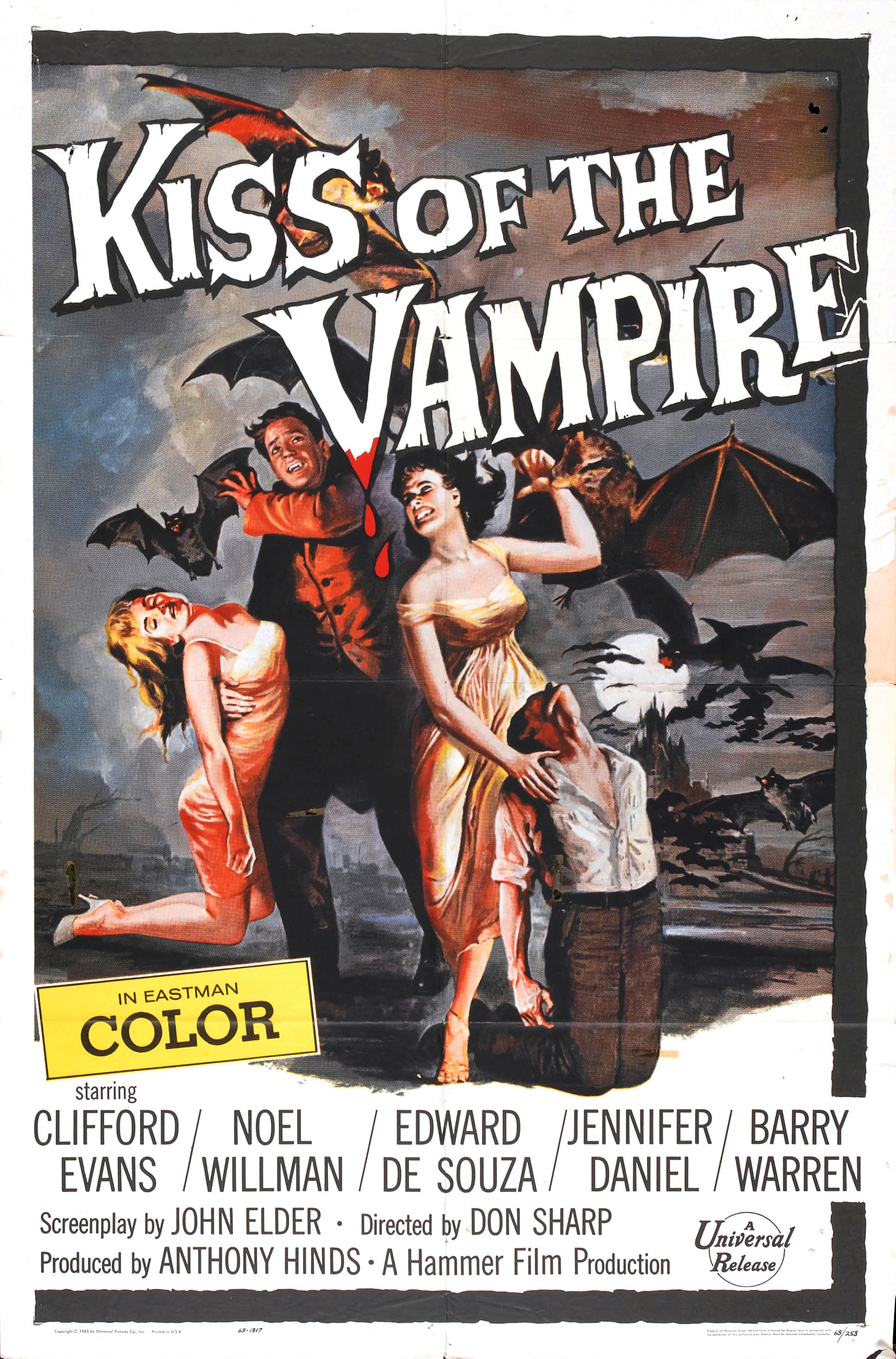 Kiss of the vampire is a 1963 horror film that is based on the subvert genre of vampire Gothic horror. Its a horror film intended to be the new franchise to the 1958 film Dracula. Vampire films are linked to sex and romance generally. Back in the 1960's, vampires were related to horror and violence, while in recent times vampires are more related to sexual actions and thrillers (non scary). The use of a ‘painted’ main image is highly
conventional of films of the period and links
to the poster for Christopher Lee’s Dracula,
but the fact that it’s in colour anchored by
the text In Eastman Color connotes that
this is a modern telling of an older story.
Kiss of the vampire is a 1963 horror film that is based on the subvert genre of vampire Gothic horror. Its a horror film intended to be the new franchise to the 1958 film Dracula. Vampire films are linked to sex and romance generally. Back in the 1960's, vampires were related to horror and violence, while in recent times vampires are more related to sexual actions and thrillers (non scary). The use of a ‘painted’ main image is highly
conventional of films of the period and links
to the poster for Christopher Lee’s Dracula,
but the fact that it’s in colour anchored by
the text In Eastman Color connotes that
this is a modern telling of an older story.Suspense is created through the enigmas surrounding the connoted relationship between the male and female vampires emphasised by the “kiss” of the title and the fate of their two victims Barthes’ Hermeneutic Code. Barthes’ Semantic Code could be applied to images of the bats and their conventional association with vampirism and horror in general.
The 1960s is often seen as the start of women’s sexual liberation, aided by events such as the introduction of the contraceptive pill in 1960. More women than ever were entering the paid workforce and sixties feminists were campaigning for equal pay, an end to sexual harassment and more equality between men and women in wider society. In America, equal pay legislation was passed in 1963. ‘Older’ stereotypes of women as passive victims of men and more modern ‘male fears’ of women challenging male dominance could both be seen to be encoded in this film poster
Stuart Hall’s theory of representation – the images of a castle, bats, the vampire’s cape and dripping blood form part of the “shared conceptual road map” that give meaning to the “world” of the poster. The audience is actively encouraged to decode this familiar generic iconography. David Gauntlett’s theory of identity – perhaps the female vampire acts as a role model for women struggling against male oppression or desperate to be seen as the equals of men, whatever the narrative or environment.
Tuesday, 27 November 2018
Print adverts- 1950's tide advert
Tide advert
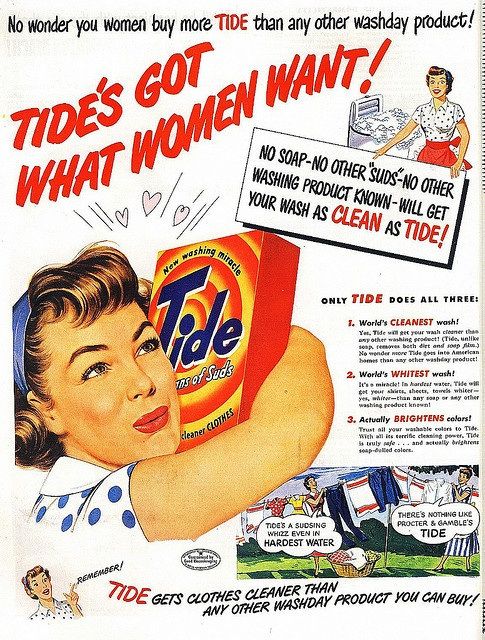
The representation of gender in adverts in 1950's show women were defined by their domestic role as wife and homemaker. Men at this time were seen in a patriarchal role as experts in all things, even the home, which was not their domain. Following World War II, women were seen as more respected. Going into the 50's, women came back into a stereotype of being a housewife. The presentation of the housewife in the poster is evident of the ideal woman's image in the 50's: Glamorous, strong, proud and effective at her stay at home role. The make up and the defined facial features of the housewife in the poster are evident of this idea of a "perfect housewife" and what some may relate to the ideal woman in hollywood.
This advert was introduced in the middle of the 50's, when a historical technological boom was occuring. With America coming out of WWII in a stable and good position, products like Tide became much more desired and available due to the boom of technology showing America that products were progressing and they should too. This can be liked to the idea of the American dream as people all around America dreamed of being able to afford products like this and being able to provide the best quality for themselves and their family.
The adverts target demographic is middle-upper class women who want the best for their family. This is shown by the use of exclamation marks and direct vocalisation to the demographic, making sure there's no room to mistake who the Ad could be aimed at and directed to. The line "No wonder you women buy Tide" and "Tide's got what women want!" show that the target for this product is meant to be for women as they were predominantly took the stay at home role and never adverted from this stereotype as although the work ethic and usefulness was shown during WWII, the hierarchy was never changed or tarnished leading to the stereotype of females staying at home not being subverted until many years later.
This advert is a hard selling advert. It uses extremely bright and bold colours to bring as much attention to the advert as possible. The theme of love is evident in this advert with the poster girl hugging the product with hearts drawn above the sign of affection. This links to Barthes theory on semiotics, as the signs and symbols of love and affection link to the idea that buying and using this product will make you fall in love with the results.
This advert was introduced in the middle of the 50's, when a historical technological boom was occuring. With America coming out of WWII in a stable and good position, products like Tide became much more desired and available due to the boom of technology showing America that products were progressing and they should too. This can be liked to the idea of the American dream as people all around America dreamed of being able to afford products like this and being able to provide the best quality for themselves and their family.
The adverts target demographic is middle-upper class women who want the best for their family. This is shown by the use of exclamation marks and direct vocalisation to the demographic, making sure there's no room to mistake who the Ad could be aimed at and directed to. The line "No wonder you women buy Tide" and "Tide's got what women want!" show that the target for this product is meant to be for women as they were predominantly took the stay at home role and never adverted from this stereotype as although the work ethic and usefulness was shown during WWII, the hierarchy was never changed or tarnished leading to the stereotype of females staying at home not being subverted until many years later.
This advert is a hard selling advert. It uses extremely bright and bold colours to bring as much attention to the advert as possible. The theme of love is evident in this advert with the poster girl hugging the product with hearts drawn above the sign of affection. This links to Barthes theory on semiotics, as the signs and symbols of love and affection link to the idea that buying and using this product will make you fall in love with the results.
Tuesday, 2 October 2018
Statement of Aims and Intentions
Statement of Aims and Intentions
For my brief, I have chosen to work with a Television sequence, more specifically a investigation in a crime drama. My idea going into this assessment was to use my knowledge of crime drama and comedy to create a short and engaging piece of work. My target audience for this assessment will be 16-35 year olds, using intense drama and relatable characters to draw them in. My theoretical perspective will aim to be seen almost as a picture frame, to include and exclude ideas and interpretations on the piece. I want the audience to see the intelligence of the main character and the way how he operates, using gut instinct and quick wits to figure out a crime. I want the audience to be able to see characters become established in the 3 minutes and be able to relate to and understand what the characters may be thinking and how they operate. The idea is for the antagonist being presented as a villain who can only be beaten by his own wording slipping up, presenting the antagonist as an intelligent teen who is able to avoid charges if not for his own actions and slip of the tongue.
I will construct different representations of individuals by playing of the idea that the crime could be seen as a hate crime. For example, the idea that a black man could kill a white man based on some racially sensitive comments that went out of hand or potentially the other way around being a white person killing a black man for the purpose of a racially charged crime, rather than being a retaliation to a hate crime. This will be a direct link to issues of events of today. I will target my intended audience by using comedy to relate it more to the younger end of my intended target audience, while using the intensity and tension that could be broken by a pin-drop to relate to my older audience.
My production will conform to the set industry text in many ways. The main way it will conform is by fitting into the given guidelines, focusing on having a varied cast representation wise, making it so that the work may feel as authentic and relevant as possible. Also, I will aim to include as many different techniques and filming effects as possible without it becoming over-edited and unrealistic. I aim to tell the story of my assessment through dialogue and facial expressions, instead of editing and after work as I feel as if my style suits more to performance rather than editing. I want to include some key media aspects into my work such as postmodern reflexivity, with the film jumping from black and white to a subverted colour style to symbolise that the film is a spin off of film noir.
Also, the genre of my TV show fits more into storytelling through acting than editing on a visual aspect. The TV channel I have decided to work with is Channel 4. The reason for this is because it attracts the demographic that I plan to (16-35).
My production will conform to the set industry text in many ways. The main way it will conform is by fitting into the given guidelines, focusing on having a varied cast representation wise, making it so that the work may feel as authentic and relevant as possible. Also, I will aim to include as many different techniques and filming effects as possible without it becoming over-edited and unrealistic. I aim to tell the story of my assessment through dialogue and facial expressions, instead of editing and after work as I feel as if my style suits more to performance rather than editing. I want to include some key media aspects into my work such as postmodern reflexivity, with the film jumping from black and white to a subverted colour style to symbolise that the film is a spin off of film noir.
Also, the genre of my TV show fits more into storytelling through acting than editing on a visual aspect. The TV channel I have decided to work with is Channel 4. The reason for this is because it attracts the demographic that I plan to (16-35).
The Bridge
The Bridge Season 3 episode 1 analysis
In The Bridge S3:E1, narrative elements are used to position audiences and create audience pleasure, identification and responses. The use of the main enigma is the best example of this. The main enigma for this episode and season is who the killer is. They paint multiple suspects so that the audience cant assume and predict who the killer is from the get-go, leading them on and keeping audience pleasure high as a crime drama fans mainly focus on the mystery as their way of staying intrigued. The show's structure positions the audience along for the journey, starting with the body discovery, leading to the suspects being painted and the investigation taking place, using small subplots throughout to keep the audience from getting stale from the crime. The main plot of the show focuses on the murder of a woman who was attempting to rid of the traditional nuclear family in Denmark, a country traditionally more conservative and traditional: against the idea of families that have foundations from gay parents.
In The Bridge S3:E1, genre codes are used to position audiences and create audience pleasure, identification and responses. The show uses traditional procedural elements to create audience pleasure and responses. It doesn't stray too far away from the traditional crime drama aspect, with a murder being committed and the body just being found, keeping not only the characters in the show but the audience also intrigued and interested in the goal of trying to find out who committed the crime. The show plays off character stereotypes in an attempt to create some form of identification with the audience. The main stereotype played on in this episode is the idea that people from Denmark are very traditional, with people from Sweden seen as being hipster and modern. An example of this is how the main character refers to the character (who's gender they don't know) as "hen"- a way to keep both gender options open in the air, with the Denmark associate chuckling- almost disrespected that the main character didn't refer to the mystery killer as he or she.
In The Bridge S3:E1, technical codes are used to position audiences and create audience pleasure, identification and responses. The use of binary opposites in terms of lighting being predominantly artificial or dark and bleak is key as it shows the dark and almost dismal atmosphere of the world the show tries to convey, creating responses from the audience to react from this. The shows seems to be mainly on a constant mid-shot, focusing on 2-3 people in a frame so the scene doesn't become oversaturated. The mis-en-scene of this episode is a key way of creating audience pleasure. They place one of the murder suspects in a dark room, feeding reptiles in a slow pace sadistic manner, following it up with a direct realisation he could be a suspect by having him put a woman's necklace on. Audio codes, specifically music, is used to create the perfect atmosphere to position the audience in. When the explosion occurs, the music hits a stop and turns into a eerie buzz almost, making the severity of the crime become more clear and taken on seriously, especially after the close up of the blown off leg is shown.
In The Bridge S3:E1, representation of the character is used to position audiences and create audience pleasure, identification and responses.
Tuesday, 25 September 2018
Life on Mars
Life on Mars

Life on Mars is a crime detective show on BBC. its based on Sam Tyler, a detective who gets hit by a car, transporting him back 33 years into 1973.
The shows plays with multiple enigma codes: the main one played with is proairetic code, otherwise known as the action code. The main one that comes to mind is the revelation that the protagonist wakes up in 1973 with no recollection of how this could have happened, claiming to own a jeep, a "military vehicle" in the 1970's. This plays into the heremunic code, a question that is posed that is used to keep the audience hooked and keeps them watching. There are many questions to answer here: How did he end up in 1973? Is there any way for him to connect back to the real world? Will his actions in this alternate timeline effect the world of his current timeline?
The representation of race in this show is intriguing. There is a lack of representation of other races in 1973, with white males and females taking up a majority of the screen time and the area. The few characters who do represent race lay on the idea heavily. For example, the bartender from Jamaica is very heavy with his accent when talking to customers. However, when the protagonist approaches the bartender, he drops the accent to show that he's to exact same as everyone else but plays the accent up as an act to attempt to fit in with the worlds perception of him a this time. This can be linked to Enoch Powell's speech on "rivers of blood": Mass immigration to the UK and how it be very negative and a bad move.
 The representation of women in this show is negative. They are presented primarily as sex objects, seen not fit to work in a police force as they are seen as too empathetic and kinds for said job. This is disproven directly by Annie, who is smarter than majority of the police force, with a degree in psychology to her name yet is treated as inferior and not as valuable information wise. Woman are presented as sex objects specifically by the police force, flirted with and almost seen as a toy that can be used to tempt men in the 1970's: Like they have next to no purpose other than to be used in unethical ways.
The them of an audience surrogate is played with a lot. The police are meant to represent our confusion and shock as the protagonist storms into the office claiming it belongs to him and that the desk he sat at in 2006 is no longer present. The idea that this alternate world is so different yet similar in terms of roles played is intriguing. He joined this alternate timeline still a detective, just of a lower rank, this implies he could be apart of a dreamworld but then is shown to have cognitive ideas and thoughts about the world, with the "real world" attempting to contact him through various ways like the TV.
The shows plays with multiple enigma codes: the main one played with is proairetic code, otherwise known as the action code. The main one that comes to mind is the revelation that the protagonist wakes up in 1973 with no recollection of how this could have happened, claiming to own a jeep, a "military vehicle" in the 1970's. This plays into the heremunic code, a question that is posed that is used to keep the audience hooked and keeps them watching. There are many questions to answer here: How did he end up in 1973? Is there any way for him to connect back to the real world? Will his actions in this alternate timeline effect the world of his current timeline?
The representation of race in this show is intriguing. There is a lack of representation of other races in 1973, with white males and females taking up a majority of the screen time and the area. The few characters who do represent race lay on the idea heavily. For example, the bartender from Jamaica is very heavy with his accent when talking to customers. However, when the protagonist approaches the bartender, he drops the accent to show that he's to exact same as everyone else but plays the accent up as an act to attempt to fit in with the worlds perception of him a this time. This can be linked to Enoch Powell's speech on "rivers of blood": Mass immigration to the UK and how it be very negative and a bad move.
The them of an audience surrogate is played with a lot. The police are meant to represent our confusion and shock as the protagonist storms into the office claiming it belongs to him and that the desk he sat at in 2006 is no longer present. The idea that this alternate world is so different yet similar in terms of roles played is intriguing. He joined this alternate timeline still a detective, just of a lower rank, this implies he could be apart of a dreamworld but then is shown to have cognitive ideas and thoughts about the world, with the "real world" attempting to contact him through various ways like the TV.
Wednesday, 27 June 2018
Luther and The Fall Analysis
Luther and the fall
Luther and the fall are crime drama shows that both take different and varying approaches to how they present their work. For example, both have very different directions when looking into Pre Credit sequences, especially in regards to action build up and technical codes.
Pre credit sequence
The pre credit sequence follows Luther chasing a man in an abandoned factory. This shows Luther as being persistent, striking fear into the man who he chases. However, the personification of Luther is a negative one, showing no sign of him being a detective at this point and more so of him being a criminal. The camera is ridged and frantic as it follows Luther. This throws the audience right into the action and brings a fast and upbeat feel to the scene In comparison, The Fall focuses on the villain who seems to be the main antagonist, stalking a solicitor. The slow, methodical pace of the scene,as he does odd things like laying lingerie on the bed and eating a orange leaving the skin on the counter. The camera is still and direct on the antagonist, not moving frantic and taking precaution to follow the actions of him, creating the characters psyche and thinking methods. The lighting of the scenes are both darkened and cryptic in a way. They make sure to avoid being well lit to set a scene of a crime drama: the cold bleak world of crime
Characters
Luther is presented as a man who puts his job first: after being put on hold for a crime he was being investigated on, he was applauded on his return to the force purely based on his work ethic and success. His personal life is rough: he's going through a divorce and doesn't know how to handle his emotions. In contrast, the criminal of episode 1 is a young female who was bound for success by a young age: making precise and calculated moves to secure her alibi for the murder: one Luther cant prove. The fact that Luther is determined to drag her down fuels her and gives her a new target for her sadistic crimes. This makes the audience identify with Luther as he is a detective with personal issues holding him back.
On the other hand, The Fall presents the criminal as the more relatable and identifiable character. They do this by showing us his personal life: he has two kids and a loving wife, has a close relationship with his family and the people who work with him. This is a disturbing feeling of identification as he's also shown as a killer who stalks and rapes his victims. The fact that he targets brunette successful females shows he has a trope to follow and presents the victims as strong. The villain is presented as having a double life: the iconography of the shot where he stares into the mirror is a sign of his double life.
Genre + Narrative
Luther is presented as a crime drama and horror, showing signs of intertextuality. Luther at first focuses as a whodunnit, with Luther at first hearing the case and trying to create links to the criminal. He figures out the villain fast, turning the show into a how they done it and why they done it. The plot focuses on this storyline while he also has to deal with his declining marriage and personal life becoming a mess.
In contrast, The fall is presented as a crime drama thriller that never shows signs of a whodunnit and instead focuses on the protagonist figuring out how to catch the villain that we already know of. His motives are unclear but his actions and personal life are very clear and presented as such. The show isn't violent and is focused on the character development of the villain and the way he brings himself to commit the crimes. The episode is clear in presenting this villain as a long standing one: the main antagonist of the series.
Pre credit sequence
The pre credit sequence follows Luther chasing a man in an abandoned factory. This shows Luther as being persistent, striking fear into the man who he chases. However, the personification of Luther is a negative one, showing no sign of him being a detective at this point and more so of him being a criminal. The camera is ridged and frantic as it follows Luther. This throws the audience right into the action and brings a fast and upbeat feel to the scene In comparison, The Fall focuses on the villain who seems to be the main antagonist, stalking a solicitor. The slow, methodical pace of the scene,as he does odd things like laying lingerie on the bed and eating a orange leaving the skin on the counter. The camera is still and direct on the antagonist, not moving frantic and taking precaution to follow the actions of him, creating the characters psyche and thinking methods. The lighting of the scenes are both darkened and cryptic in a way. They make sure to avoid being well lit to set a scene of a crime drama: the cold bleak world of crime
Characters
Luther is presented as a man who puts his job first: after being put on hold for a crime he was being investigated on, he was applauded on his return to the force purely based on his work ethic and success. His personal life is rough: he's going through a divorce and doesn't know how to handle his emotions. In contrast, the criminal of episode 1 is a young female who was bound for success by a young age: making precise and calculated moves to secure her alibi for the murder: one Luther cant prove. The fact that Luther is determined to drag her down fuels her and gives her a new target for her sadistic crimes. This makes the audience identify with Luther as he is a detective with personal issues holding him back.
On the other hand, The Fall presents the criminal as the more relatable and identifiable character. They do this by showing us his personal life: he has two kids and a loving wife, has a close relationship with his family and the people who work with him. This is a disturbing feeling of identification as he's also shown as a killer who stalks and rapes his victims. The fact that he targets brunette successful females shows he has a trope to follow and presents the victims as strong. The villain is presented as having a double life: the iconography of the shot where he stares into the mirror is a sign of his double life.
Genre + Narrative
Luther is presented as a crime drama and horror, showing signs of intertextuality. Luther at first focuses as a whodunnit, with Luther at first hearing the case and trying to create links to the criminal. He figures out the villain fast, turning the show into a how they done it and why they done it. The plot focuses on this storyline while he also has to deal with his declining marriage and personal life becoming a mess.
In contrast, The fall is presented as a crime drama thriller that never shows signs of a whodunnit and instead focuses on the protagonist figuring out how to catch the villain that we already know of. His motives are unclear but his actions and personal life are very clear and presented as such. The show isn't violent and is focused on the character development of the villain and the way he brings himself to commit the crimes. The episode is clear in presenting this villain as a long standing one: the main antagonist of the series.
Tuesday, 5 June 2018
music video examples of ethnicity
J cole- G.OM.D
In this video, the main theme is slavery and people fighting against the power. This is shown off in the 1st 20 seconds of the video showing a clear distinction between the slave workers and the slave owners. The slave owners kicking the slaves shows the hierarchy of the time. J Cole is presented as a slave with some form of power in this video. He, unlike other slaves, is allowed in the house to freely roam and help the slave owners. This could be because his ethnicity is mixed which helps distinguish him form the other slaves. They make sure that Cole is still shown as somewhat of a slave, being slapped in the face by an owner with a chilling grin on his face. The use of ethnicity to show the difference between roles in this video is key as is keeps a clear line of power and freedom in an older time period. The video shows that J Cole has a clear feeling of sympathy towards the slaves. He attempts to create conversation or show acknowledgement to be shoved away and looked at as the same scum that rule over them.
- Main theme of video is slavery
- Performance video
- Narrative is Cole is freeing slaves from the inside
- Set in older America when slavery was present
- Clear distinction between slave workers and slave owners
- Cole shown as a slave allowed in house due to him being of a mixed ethnicity
- Cole still shown as a slave: slapped in face
- Slaves look at Cole as some sort of scum due to him being allowed in house
- Close up of troubled slaves
- Slow moving close ups of slaves as they prepare
- Coles star persona still shown even in bleak setting
- Non sexualised clothing shows tone of video
- Main message is to promote power of black people and slaves
- Shows that all people should be treated right or fighting and conflict will never end
Childish Gambino: This Is America
- Performance video based on modern day America
- Trousers link to old confederates uniform
- Uses over exaggerated facial expressions and dances throughout
- Takes careful care of gun- wrapping it in red cloth
- Takes little to no care of body- drags it across ground
- Links to gun violence in America: people care more for guns than lives
- Uses choir to draw distinct comparison to Charlston shootings in 2011
- Once again shows gun cared for and bodies left to lay
- Uses black child dancers to distract viewer from background
- Links to America today: care more for performances than the real issues that stem from them
- Takes out blunt to smoke: links to weed legalisation issues in America
- 17 second pause of no music: subtle link to 17 victims in Florida shooting earlier this year
- Public record the violence and chaos: show they care not for lives but for content
- Ends with Gambino running away from society
Thursday, 26 April 2018
Film Trailer Evaluation
Film Trailer Evaluation
To begin with the process of making our film trailer, we decided on the genre being comedy. The main reason we chose comedy over our other option, horror, was that we felt as if a comedy would be easier for us to film and felt like the more natural idea for us to work with. The main appeal comedy had was that it created a more energetic and active filming process. We felt as if going into a comedy we would have fun filming and editing the trailer. The name we deiced on was "Busting a nut-job". We went with the tagline of "Theres more to come". We felt like this name gave the comedic tone right off the bat to the audience, letting them know what they were getting into. We had inspiration from the film "Get hard" which had the same playful title. During filming, we used wide shot angles for the most part. We decided to do this because it was a simple shot to pull off for the most part. However, in the last scene we used different camera angles, switching it up every few seconds during the clip to add dramatic suspense to the joke and to add more authentic feeling to the reaction and to the joke itself. The clip captured each characters reaction perfectly, showing that some react more shocked while others more puzzled. During editing, I used the Imovie programme to edit the clips. We were able to cut out parts of clips that were not meant to be in production and from there added a background track and over 1:30 of clips. The background track we used was 'Bad to the bone' as it fit with the goofy idea of the film. We used editing to make the final scene feel more special by cutting the track short as soon as the last joke is made. This adds dramatic effect.
The trailer is able to appeal audiences and promise pleasure by using short and snappy jokes, creating small laughs repeatedly rather than using long and dragged out jokes to do the same thing. This promises not only good comedy but lets the audience know what they are getting into: a film that takes social boundaries of comedy and breaks them. This entices people to watch a more edgy yet creative film. The film encourages repeat viewing and fandom by using the tagline "theres more to come" hinting at a possible sequel and meaning that the established characters have more than just this film to develop characters. To create a fandom we created characters that are relatable to a viewer of 16-24, who normally partake in fandoms. With this in mind, any group of people can appeal to a specific character and expect from from said character in future instalments.
When making the poster, we focused on not only establishing characters from the get go but also the comedic appeal and colour concepts. The victim of the film lying down, the 'douche' standing up acting like he owns the room and the sarcastic character standing up on his phone, proving that he is ironically not doing the stupid hand gesture that his character technically should be doing. This adds to the film dynamic and gives a good idea about the characters. The use of fake names in the shoutouts, (clearly fake) shows how silly the promotional trailer, making the film hard to teel when any element of seriousness will be used at some point. We avoided adding anything to the plot of the story in the trailer as we feel that doing so would spoil the film for the viewer if they see the trailer.
When making the poster, we focused on not only establishing characters from the get go but also the comedic appeal and colour concepts. The victim of the film lying down, the 'douche' standing up acting like he owns the room and the sarcastic character standing up on his phone, proving that he is ironically not doing the stupid hand gesture that his character technically should be doing. This adds to the film dynamic and gives a good idea about the characters. The use of fake names in the shoutouts, (clearly fake) shows how silly the promotional trailer, making the film hard to teel when any element of seriousness will be used at some point. We avoided adding anything to the plot of the story in the trailer as we feel that doing so would spoil the film for the viewer if they see the trailer.
Wednesday, 25 April 2018
Film Trailer Other Marketing: Interview
Interview
This interview will be between The Sun and the producer/editor of the film (me). The 2nd part will be with my character in the film. At this point only the trailer has been shown to the public.
Q1: What sort of person is going to love this show?
a: I feel like someone who is looking for a straight simple comedy that attempts to fire off jokes at a fast pace while also focuses on character development will enjoy it. Anyone who was a fan of the 21/22 Jump Street films will enjoy this film. The film is directed at 16-24 year olds, attempting to use pop culture references in a cringey yet entertaining was.
Q2:Who should not come see this show?
a:I feel like those who are easily offended by jokes about issues today should stay away from the film. These include but are not limited to: those who may find feminist, sex or just slapstick comedy offensive.
Q3:What’s going to surprise people about this show?
a: The comedy itself will surprise people. The fact that we take the line of jokes and go way over it may surprise people. We do this because we feel like as people attempting to make comedy jokes, our craft and the type of jokes we make should not be as limited as society makes it. This film attempts to break that boundary and make something that hold nothing back.
Q4:Who in the show is most like their character? Who’s the least?
a: I feel like this is up to the opinion of the people watching. The victim of the trio is meant to gain sympathy in small doses form the audience. However, the sarcastic character is meant to make enough jokes and be the stand out of the group that the audience would be more attracted to his character by the end. The least is again up to the fan reception but the direction of the film is meant place the mean one of the group in this position, making the more straight darker comedy in a way that is meant to offend compared to the others.
Q5:Is it easier to play this character or to be yourself on stage?
a: I feel like during the film I had to play someone who forced the jokes more often than i would in real life. I had to be able to nail the jokes on the head. However, the jokes in the movie were a product of actual jokes made outside of filming for the film, using real life elements to make the jokes made filming feel much more natural and easier to not break down as filming. This did not help prevent bloopers on the 1 scene that we actually didnt say outside of the film, coming up with some amazing reactions to constant failure.
Q6:Without giving anything away, what’s your favourite line of dialogue?
a:My favourite joke that wasnt included in the trailer was one that my character said. It was a stand up style joke that went "The other day I went to the bank, an old lady asked me to check her balance. So I pushed her over."
Q7:How is this character like you? Different?
a: My character was similar in the sense that I have the best and worst timing at making jokes. The main reason I was given this role is because at least half of the jokes in the film were said by me to begin with. I have some bad social anxiety at times but doesn't stop me from making a fool of myself, exactly like my character.
Q8: Last question, when is the film coming out in theatres?
a: The film will be released on September 17th, at most cinemas around the country and world.
Film Industry two trailers (independent and mainstream)
Marvel's Black Panther Trailer
Black Panther was a mainstream film made by Marvel in 2018. It was directed by Ryan Coogler (Creed). The film focuses on Black Panthers development as a character continuing from his role in Captain America: Civil War. This film makes history as it is not only the 1st Marvel film to be directed by a black director, but its the 1st marvel film to include a predominately black cast. The film uses many wide angle shots to emphasise the budget of the film and to give a good visualisation of Wakanda: a country built using the most expensive material in the world, isolated and hidden from the rest of the world. The film also includes Kendrick Lamar as the main music producer of the film, using hit songs in the film such as Kings Dead and All the stars, using other artists such as The Weekend and SZA. The film attempts to use CGI and pop culture references to retain its 16+ demographic Marvel has obtained in the past few years.
Lady Bird
Lady Bird is an independent film that focuses of a girl and her upbringing, creating the idea the film will be a coming of age style film, telling the story of the girl that is relatable to the audience and can show growth, trails and tribulations. The trailer focuses on the girls surrounding cast and the type of characters they are in comparison to others. They attempt to tell a narrative using the characters in the trailer, using this small budget yet effective reel in tactic to draw in an audience as they lack the money mainstream films do to use CGI and high effects.
Subscribe to:
Posts (Atom)